
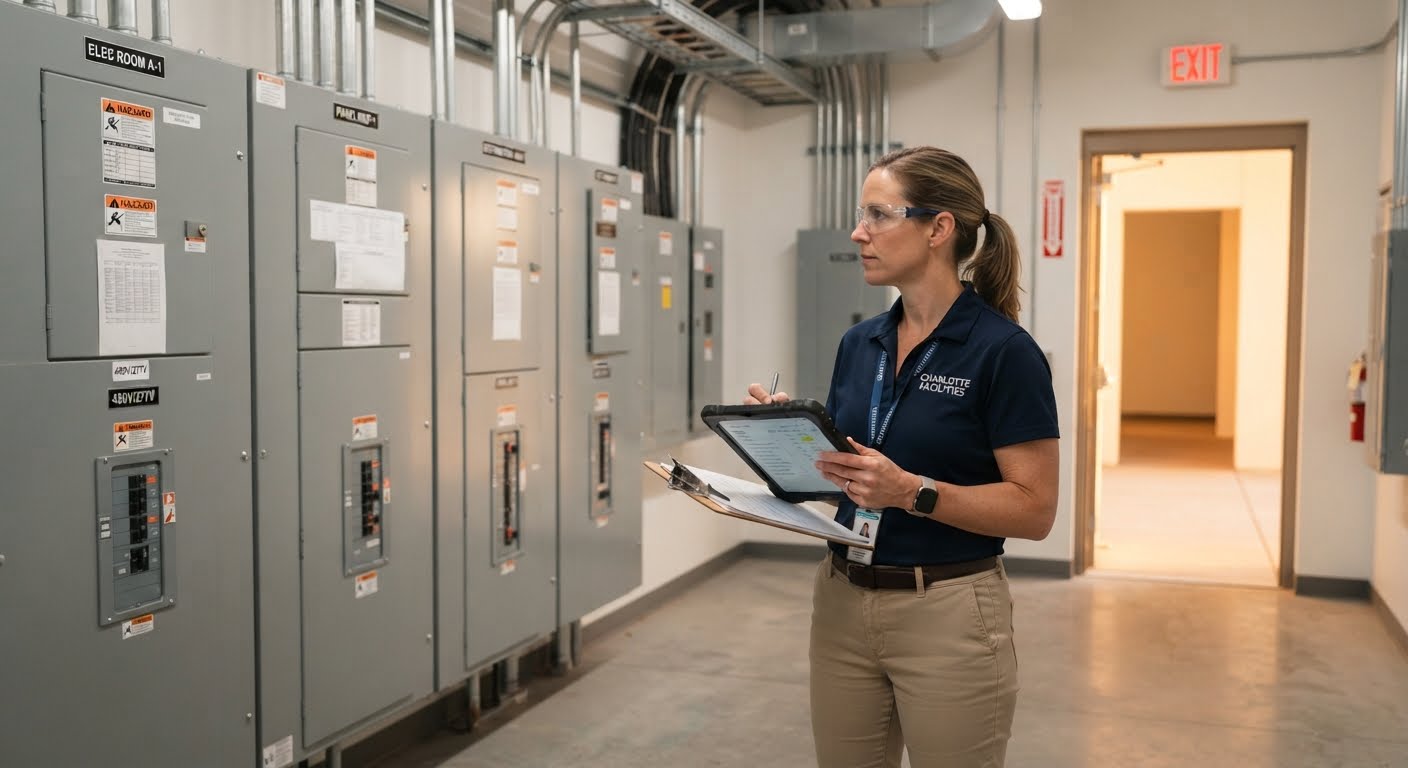
Commercial properties in Charlotte, North Carolina, depend on electrical systems that support lighting, tenant equipment, security, refrigeration, communications, and daily operations. A practical safety routine helps facility managers identify concerns early and determine when qualified help is needed for commercial electrical services.
From offices and retail sites to warehouses and multifamily common areas, each building has different loads, equipment, and operating hours. This checklist focuses on visible conditions, recordkeeping, and safe escalation, not on attempting electrical repairs without appropriate training and authorization.
Electrical reliability is closely tied to other building systems. Commercial HVAC equipment, including rooftop units, chillers, and air handlers, can place significant strain on a facility’s electrical distribution system, especially during additions, replacements, or layout changes.
Why Commercial Electrical Checklists Matter
Commercial facilities often have changing tenants, new plug loads, altered floor plans, and equipment that operates well beyond normal business hours. A checklist creates a repeatable process for noticing problems before they disrupt operations or expose occupants to avoidable hazards. It also helps managers distinguish between a routine maintenance item and a condition that requires immediate action.
Workplace electrical obligations can vary by occupancy, equipment, and jurisdiction. The electrical standards that address workplace hazards provide useful context for employers, while local code requirements, permits, and inspection practices should be confirmed with the appropriate authority.
 Start With a Safe Walkthrough
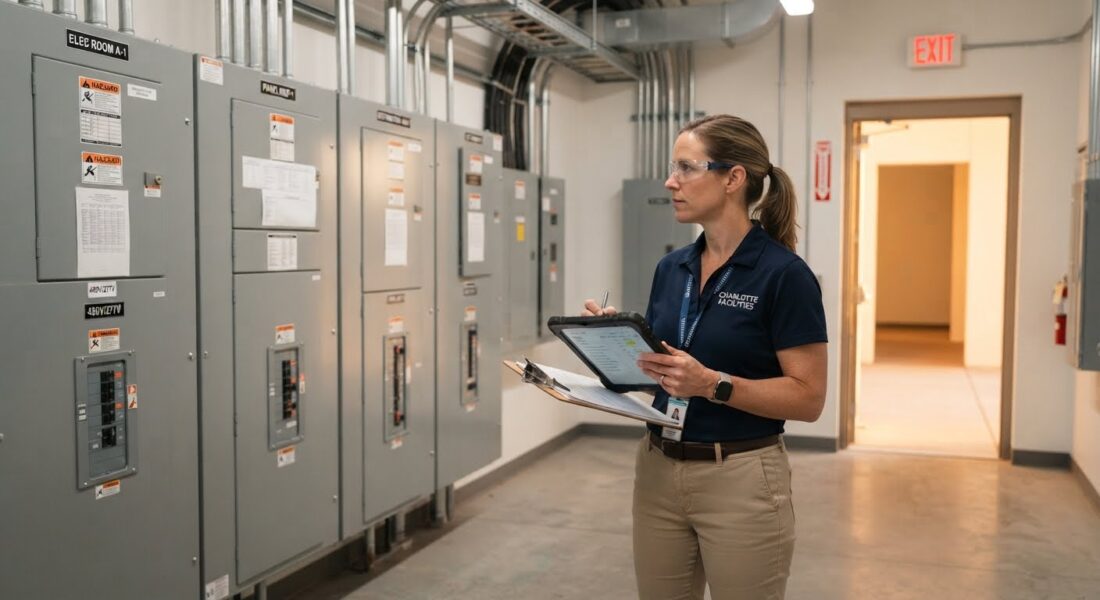
A visual walkthrough should not require opening enclosures, removing panel covers, or touching electrical components. Check electrical rooms, service corridors, storage spaces, tenant areas, loading zones, and exterior equipment locations. Look for moisture, dust buildup, pest activity, damaged covers, missing labels, and materials stored too close to equipment.
Photorealistic image of a Charlotte commercial facility manager conducting a safe visual electrical walkthrough in a clean electrical room, reviewing labeled panels from a distance with a tablet or checklist, warm golden-hour light entering from a nearby doorway, soft shadows, and a calm, professional atmosphere.
Keep access routes clear so personnel can reach electrical equipment without having to move boxes, furniture, cleaning products, or tools. Record the location, date, condition, and a photo when appropriate. If there is smoke, sparking, exposed conductors, or water near electrical equipment, keep people away and follow the facility’s emergency procedures.
Review Panels and Distribution Equipment
From a safe exterior position, check whether panel doors, covers, and visible components appear intact and secure. Panel schedules should be readable and should reasonably match the areas or equipment they identify. Note rust, discoloration, melted materials, unusual noise, or signs that a panel surface is warmer than expected.
Facility managers should also consider whether tenant improvements, added office equipment, kitchen appliances, or new mechanical equipment may have changed electrical demand. Internal inspection, torque verification, load analysis, thermal imaging, and repairs require qualified electrical personnel. A documented maintenance program may also draw on the NFPA 70B electrical equipment maintenance framework when establishing procedures appropriate to the site.
Inspect Wiring, Outlets, and Cords
Look for cracked receptacles, loose faceplates, damaged plugs, frayed cords, or cords pinched by doors and furniture. Remove visibly damaged portable equipment from service until it can be evaluated. Extension cords are intended for temporary use, so repeated reliance on them may indicate that additional permanent receptacles or circuit capacity should be evaluated.
Also watch for power strips connected to other power strips, overloaded adapters, and electrical devices used near sinks, exterior areas, or other damp conditions. Grounding, bonding, and protective devices should be included in the professional inspection plan rather than treated as a visual-only task.
Check Lighting and Emergency Systems
Review lighting in work areas, corridors, stairwells, loading areas, parking locations, and paths of travel. Flickering lights, buzzing fixtures, delayed startup, dark zones, and fixtures that seem unusually hot deserve follow-up. Confirm that exit signs are visible and illuminated, and schedule emergency-lighting and backup-power testing according to the building’s applicable requirements.
Watch for Warning Signs
Some conditions warrant a prompt response rather than placement on a routine work list:
- Burning plastic or an unexplained electrical odor
- Smoke, sparks, arcing, or sizzling sounds
- Repeated breaker trips or recurring loss of power
- Hot outlets, switches, plugs, or panel surfaces
- Flickering across multiple areas of the building
- Water near outlets, panels, or electrical rooms
- Exposed wiring or equipment damage following an impact or storm
Do not repeatedly reset a breaker, conceal an odor, or return damaged equipment to service. Keep the area clear, document what occurred, and arrange for qualified evaluation.
Set a Practical Maintenance Schedule
Monthly Checks
- Walk electrical rooms for blocked access, moisture, pests, and visible damage.
- Review reports of breaker trips, failed outlets, and lighting concerns.
- Check exit signs and emergency lighting as required for the property.
Quarterly and Annual Checks
- Review panel labels, accessible cords, receptacles, disconnects, and exterior covers each quarter.
- Compare equipment changes with available electrical documentation.
- Schedule a qualified condition review at intervals suited to the equipment and operational risk.
- Update the plan after renovations, major outages, tenant changes, or installation of significant equipment.
Document Findings and Corrective Work
Use one inspection form or digital log for each review. Include the concern, location, date, priority, assigned person, due date, status, photos, and completion notes. Keep panel schedules, equipment lists, one-line diagrams when available, test records, and emergency contacts organized in a location accessible to the facility team.
A simple priority system can help: classify active hazards such as arcing or water near energized equipment as immediate, recurring trips or failed emergency systems as high priority, and faded labels or minor documentation gaps as routine. Review open items regularly to prevent them from disappearing after the initial report.
Know When to Call a Qualified Professional
Facility staff can observe, report, and protect an area, but panel work, energized troubleshooting, circuit testing, repairs, load studies, grounding tests, and arc-flash evaluations require appropriate qualifications and controls. Before work begins, confirm applicable licensing, permits, shutdown planning, and site-specific safety procedures.
Common Questions
How often should a commercial building receive an electrical review?
The interval depends on equipment condition, occupancy, operational demands, maintenance history, and local requirements. Regular visual checks should be supplemented by qualified testing based on risk.
What should happen after a breaker trips?
Document what was operating at the time, avoid repeated resets, and seek qualified investigation if the problem recurs or affects important equipment.
Why are records important?
Records help teams identify recurring problems, track corrective actions, prepare for inspections, and make better decisions about repairs and upgrades.
Conclusion
For Charlotte facility managers, electrical safety works best as part of a routine building-management process. Consistent walkthroughs, clear documentation, unobstructed access to equipment, and qualified professional support can help protect occupants and reduce avoidable interruptions.