
Fort Mill homeowners balance everyday electrical needs with the realities of humid summers, thunderstorms, heavy rain, and occasional power interruptions. A yearly safety review helps protect people, appliances, and the electrical system before a small concern turns into a more urgent problem. When an issue needs closer attention, an electrician in Fort Mill, SC can assess equipment that should never be opened, tested, or repaired by a homeowner.
This checklist is designed for homes throughout Fort Mill, from established neighborhoods with older wiring to newer properties adding chargers, backup power, smart devices, and all-electric appliances. Focus on what can be safely observed, prepare before severe weather arrives, and treat water, heat, smoke, and damaged wiring as immediate warning signs.
Why a 2026 Electrical Checkup Matters in Fort Mill, SC
Today’s homes support more devices than a decade ago, like home offices, streaming, larger appliances, electric water heaters, HVAC controls, garage tools, and electric vehicles, increasing circuit demand. Older systems may still work until another major load is added. Storms worsen these weaknesses; wind can damage outdoor covers, rain can reach compromised boxes, and lightning surges can harm electronics. Installing an EV charger without checking panel capacity can cause trips or reveal the need for circuit or load management upgrades.
Start With a Safe Visual Inspection
A visual review is a sensible first step, but it is not a substitute for diagnosis or repair. If you spot a concern, arrange electrical repairs and maintenance rather than removing outlet covers, opening the panel, or touching exposed components.
- Look for cracked, loose, discolored, or unusually warm outlets and switches.
- Check extension cords and appliance cords for fraying, cuts, crushed sections, or exposed wire.
- Pay attention to buzzing, crackling, flickering lights, or unusual electrical odors.
- Keep the electrical panel dry, visible, and easy to reach.
- Check outdoor receptacle covers, landscape lighting, and visible conduit for damage.
- Keep cords, power strips, outlets, and appliances away from standing water.
Prepare the Electrical Panel Before Storm Season
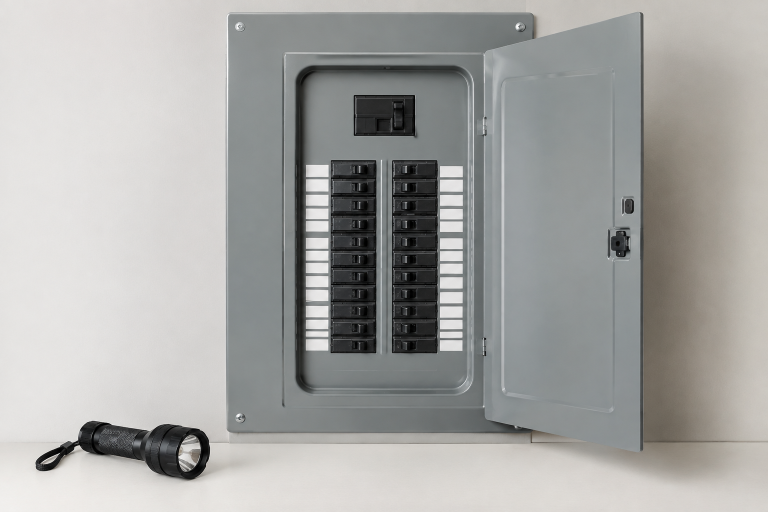
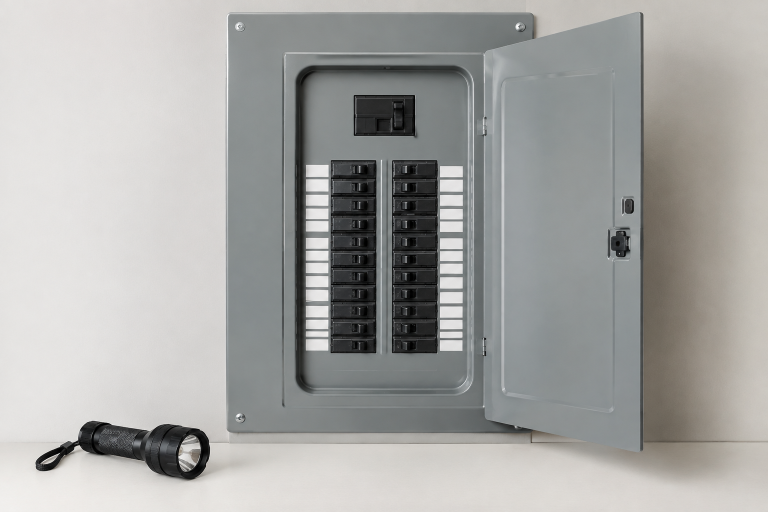
- Locate the main panel and clear away stored items, tools, and clutter.
- Confirm that breaker labels are readable and match the rooms or equipment they control.
- Make note of breakers that trip frequently, feel unusual, or will not reset.
- Look for rust, water staining, scorch marks, or visible damage around the panel enclosure.
- Keep a flashlight near the panel, but do not rely on a phone flashlight if you need both hands free.
Never touch a panel that is wet, smoking, sparking, or visibly damaged. Internal breakers, wiring, grounding, service conductors, and panel capacity should be evaluated only by a qualified electrical professional.
Protect Electronics During Lightning and Severe Weather
When thunder is heard in Fort Mill, move inside promptly. Lightning can enter a structure through wires, pipes, or the ground, so follow safe indoor practices during lightning activity by avoiding corded phones, plugged-in electrical equipment, plumbing, open garages, porches, and exterior doors or windows.
Do not unplug electronics during an active thunderstorm, because handling connected equipment can create an added risk. Instead, disconnect nonessential sensitive electronics before storms arrive when conditions are calm, and use properly selected surge protection as one part of a broader protection plan.
Build a Practical Power Outage Plan
Decide in advance which loads matter most. Essential loads may include medically necessary equipment, refrigeration, a sump pump, basic lighting, phone charging, and heating or cooling controls. Internet equipment, televisions, kitchen appliances, and work devices may be useful but are not always essential. Pool equipment, decorative lighting, workshop tools, and other high-demand equipment can usually remain off during an outage.
Store flashlights, fresh batteries, charged battery packs, bottled water, and emergency contacts in one familiar location. Flashlights are generally safer than candles when the power is out.
Use Generators Without Creating a New Hazard
- Run portable generators outdoors in a well-ventilated location.
- Keep them away from doors, windows, vents, and attached garages.
- Never connect a generator directly to a wall outlet.
- Use cords rated for outdoor use and suited to the load when powering individual appliances.
- Use a properly installed transfer switch or approved connection equipment for selected home circuits.
- Test carbon monoxide alarms regularly and keep them working throughout the home.
Backfeeding can energize utility lines and put utility workers at risk. Generator sizing, transfer equipment, permits, and installation details should be planned by a qualified professional.
Check Outdoor Electrical Equipment After a Storm
Stay well away from downed or sagging utility lines, damaged service equipment, and standing water around electrical components. Do not touch flooded outlets, panels, meters, generators, or appliances. From a safe distance, look for broken covers, loose light fixtures, damaged conduit, or exposed wiring, and keep children and pets away from the area.
Safety reminder: Outdoor equipment may still be energized even if the lights inside the house are off. Report damaged utility equipment to the power company, or call emergency services if there is immediate danger.
Plan for New Electrical Loads
Before installing major equipment, consider the entire electrical system instead of just adding a breaker. Electric vehicle chargers, heat pumps, water heaters, hot tubs, pool equipment, workshops, backup batteries, generators, and large appliances may need dedicated circuits or upgrades. A load calculation determines if the service, panel, wiring, disconnects, and grounding can support the added demand. Not all EV chargers require panel upgrades, but every installation should start with an available capacity review.
Know When Professional Help Is Needed
Stop using affected equipment and seek help for burning odors, repeated breaker trips, flickering across multiple rooms, buzzing or warm outlets, scorch marks, shocks from switches or appliances, water damage near electrical equipment, damaged wiring, two-prong outlets, or an outdated panel. Homeowners can replace alarm batteries, keep panel access clear, and update breaker labels. Panel work, new circuits, rewiring, generator connections, and EV charger installation should be left to qualified professionals.
A Simple Seasonal Maintenance Schedule
Before Storm Season
- Test smoke and carbon monoxide alarms.
- Inspect visible outdoor covers, cords, and wiring.
- Review generator fuel, oil, cords, and connection equipment.
- Clear access to the electrical panel.
During and After Severe Weather
- Go indoors when you hear thunder and follow the principle that it means it is time to get indoors.
- Avoid plumbing and plugged-in equipment during lightning activity.
- Use flashlights during outages and avoid wet or damaged electrical equipment.
- Arrange an inspection after flooding, lightning damage, smoke, sparks, or unusual breaker activity.
Common Questions About Home Electrical Safety
Can a homeowner reset a tripped breaker?
A breaker may be reset once if the area is dry and there are no warning signs. If it trips again, do not keep forcing it on.
Can a portable generator power the whole house?
That depends on the generator capacity, the home’s electrical design, and the approved connection method. Whole-home backup requires proper planning and equipment.
What should happen after flooding?
Treat flooded electrical equipment as dangerous. Avoid contact and have affected circuits and appliances evaluated before using them again.
Conclusion
A safer Fort Mill home starts with clear panel access, working alarms, careful storm preparation, safe generator practices, and prompt attention to warning signs. A yearly check also makes it easier to plan for new electrical demand before the system is pushed beyond what it can safely support.