
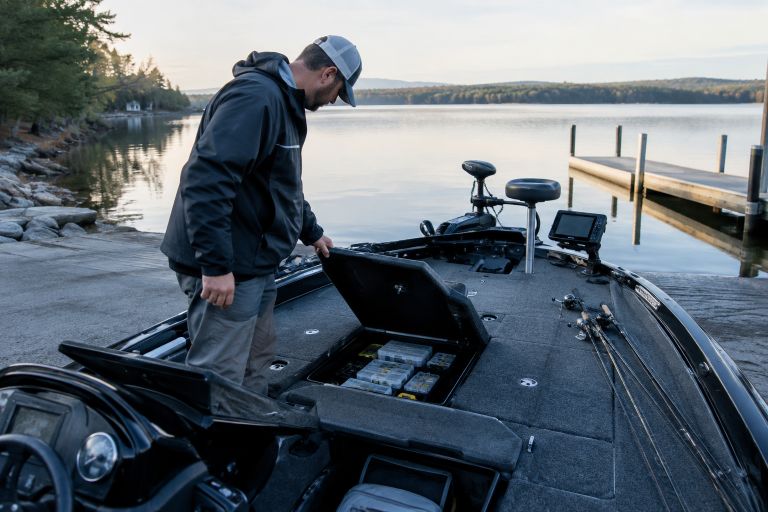
Choosing a bass boat in Norwich, Connecticut, starts with an honest look at where and how you fish. Before comparing horsepower, screen sizes, or paint colors, browse bass boats for sale with a clear idea of your usual launch sites, fishing partners, and equipment needs. The best setup is the one that lets you spend a more productive, comfortable time on the water. In southeastern Connecticut, anglers may move between protected ponds, rivers, reservoirs, and larger waters that can become choppy when wind or boat traffic picks up. That variety makes balance important. A boat that feels ideal for a quiet backwater may be less comfortable during a long run across exposed water, while an oversized rig can be harder to store, tow, and launch at smaller ramps around Norwich.
Start With The Water You Fish
List the three places you fish most often, then note typical water depth, ramp conditions, prevailing wind, distance from ramp to fishing spot, and the amount of shoreline cover. A calm pond favors a compact, shallow-running setup. A larger lake or broad river calls for a hull that offers a more secure ride as conditions change. Bass boats are primarily designed for freshwater fishing, so they should not be treated as substitutes for a vessel designed for rough offshore travel. If you are comparing local options in Connecticut and searching for boat dealers near me, bring that location list with you. It gives you a practical way to judge whether a boat fits the water you actually use rather than the water shown in a promotional photo.
Choose A Hull That Fits The Conditions
Aluminum and fiberglass bass boats both serve Connecticut anglers well, but they deliver different advantages. Aluminum models are often lighter to tow and can be appealing to owners who use smaller ramps, keep their boat at home, or fish in shallower waters. Fiberglass models commonly provide a larger platform and a more substantial ride, which can be valuable when traveling longer distances across open water in Connecticut’s variable conditions.
Look beyond the material itself. A wider beam can create more usable casting room and a steadier platform for two anglers, coolers, and tackle. Check the hull shape, seating position, and freeboard as well. The basic bass boat design centers on raised casting decks, tackle storage, a livewell, an outboard, and a bow-mounted trolling motor, but the way each manufacturer arranges those features matters on a full day of fishing.
Match The Deck Layout To Your Fishing Style
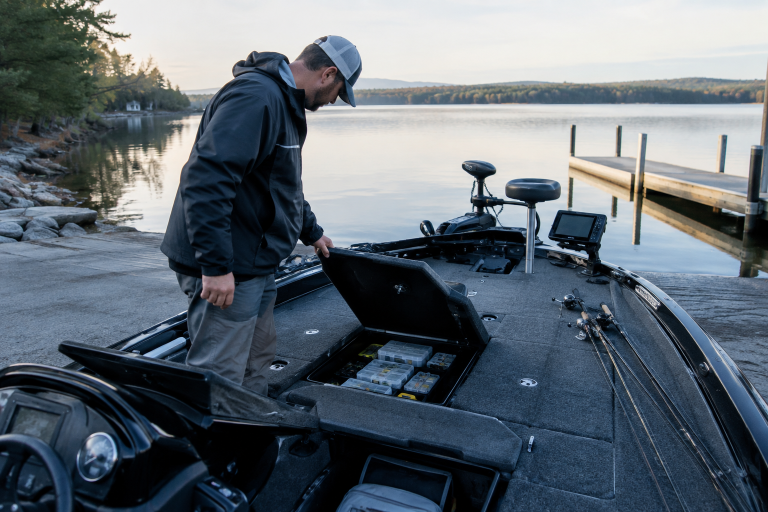
Deck layout affects every cast, tackle change, and move around the boat. Stand in the boat before buying it. Open compartments, step from the bow to the cockpit, and picture doing so while wearing a rain jacket or carrying a rod in each hand.
Choose Features That Support Your Normal Trip
- Shallow-cover fishing: Favor an uncluttered front deck, dependable bow control, and fast access to flipping rods and terminal tackle.
- Deep-structure fishing: Reserve dash and bow space for mapping and sonar displays, with protected routes for transducer and power cables.
- Family fishing: Prioritize secure seats, handholds, straightforward boarding, and a layout that does not force passengers to sit on deck lids.
- Tournament fishing: Look closely at rod locker capacity, livewell access, tackle organization, and clear movement between the bow and console.
Compare Outboard And Trolling Motor Needs
The outboard determines acceleration, cruising performance, fuel consumption, and how quickly the boat can get on plane with a typical fishing load. Do not select an engine solely because it is the largest option. Never exceed the maximum horsepower listed on the boat’s capacity plate, and consider the weight of passengers, batteries, tackle, fuel, and a full livewell. A trolling motor should match the boat’s size and the conditions you expect to face. Compare thrust, shaft length, control method, battery requirements, and whether the mount fits the bow cleanly. More thrust is useful only if the batteries, onboard charger, wiring, and charging routine can reliably support it.
Plan Electronics Before Buying Accessories
Start with the essentials: reliable GPS mapping, sonar appropriate to your fishing approach, and displays you can see without blocking controls or creating a tripping hazard. Traditional sonar helps interpret depth and bottom changes, while side imaging and forward-facing sonar can add different views of what is around the boat. Bigger screens are not automatically better if they create clutter or leave no room for safe movement. When you want multiple displays, choose compatible units that can share mapping, waypoints, and transducer information as intended. Plan mounting locations and battery capacity before adding accessories. A tidy installation is easier to use, inspect, and maintain than a console crowded with equipment.
Check Storage, Livewell, And Seating Space
Open every compartment during an inspection. Rod lockers should fit the rod lengths you carry and allow access without having to unload half the boat. Storage should hold gear for a typical day of fishing in Norwich, Connecticut, including rain gear, safety equipment, food, tackle, and spare clothing. Paying for large compartments that remain empty adds cost without improving your trip. Inspect livewells for usable space, functioning aeration, secure lids, drains, and insulation. Also consider where passengers will sit when the boat is underway. A fishing platform can be excellent for casting, but still be a poor fit if it leaves a partner uncomfortable or without a secure seat.
Review Capacity, Safety, And Launch Needs
Confirm passenger limits, weight limits, and horsepower limits on the capacity plate. Carry properly fitted life jackets, required signaling and flotation equipment, a fire extinguisher when required, navigation lights, and a first-aid kit. Learn about core recreational boating safety equipment requirements from the BoatUS Foundation, but owners should also verify requirements for their boat and the waters they use.
Use This Launch Checklist
- Install the drain plug.
- Check fuel, battery connections, and battery charge.
- Secure rods, tackle, and loose gear.
- Inspect trailer lights, tires, winch strap, and safety chains.
- Confirm safety equipment is on board before leaving the ramp.
Build A Realistic Ownership Budget
Purchase price is only the starting point. Build room in the budget for registration, insurance, fuel, routine engine service, batteries, storage, trailer tires and bearings, winter preparation, and unexpected repairs. A lower-priced used boat may be the better value, but not if it immediately needs a trolling motor, electronics, battery replacement, or trailer work. Set aside a repair reserve before the first launch.
Use A Practical Boat-Buying Checklist
For new or used boats, inspect the hull, transom, keel, rub rail, hardware, and drain fittings. Test steering, trim, bilge pump, livewell, lights, electronics, and charger. Review the engine service records, check the wiring for corrosion or loose connections, and inspect the trailer frame, bunks, brakes, tires, lights, and bearings. Request a water test when possible. A boat that looks clean on a trailer still needs to run, steer, and load properly.
Avoid Common Setup Mistakes
- Choosing top speed over the water conditions you normally face.
- Adding large displays without planning wiring and battery capacity.
- Ignoring trailer condition because the hull looks good.
- Overloading the boat with tackle, batteries, coolers, and accessories.
- Skipping a water test and relying on a quick walk-around.
- Forgetting that every passenger needs a safe, comfortable seat.
Make The Final Choice With Confidence
The right bass boat for Norwich, Connecticut, is not necessarily the fastest or the most expensive. It is the boat that matches your usual water, fishing style, tow vehicle, storage space, and long-term budget. A well-planned, practical setup can provide more confident launches, smoother days on the water, and more time focused on fishing the ponds, rivers, and reservoirs that southeastern Connecticut offers.
Conclusion
Choosing a bass boat in Norwich, Connecticut, is ultimately about matching the boat to the way you actually fish. Local water conditions, launch sites, fishing partners, equipment, towing capacity, storage space, and budget should all be considered before focusing on speed, electronics, or appearance. Aluminum and fiberglass models offer different practical advantages, while deck layout, storage, seating, livewell capacity, and motor selection can significantly affect comfort during a full day on the water. Buyers should also inspect the hull, engine, trailer, electrical systems, electronics, and safety equipment, particularly when considering a used boat. A realistic ownership budget should include fuel, maintenance, registration, insurance, storage, batteries, trailer upkeep, and potential repairs. Taking time to compare these details and, when possible, conduct a water test can help Norwich-area anglers choose a bass boat that fits their regular fishing conditions and provides a practical setup for enjoying Connecticut’s ponds, rivers, reservoirs, and larger waters.