
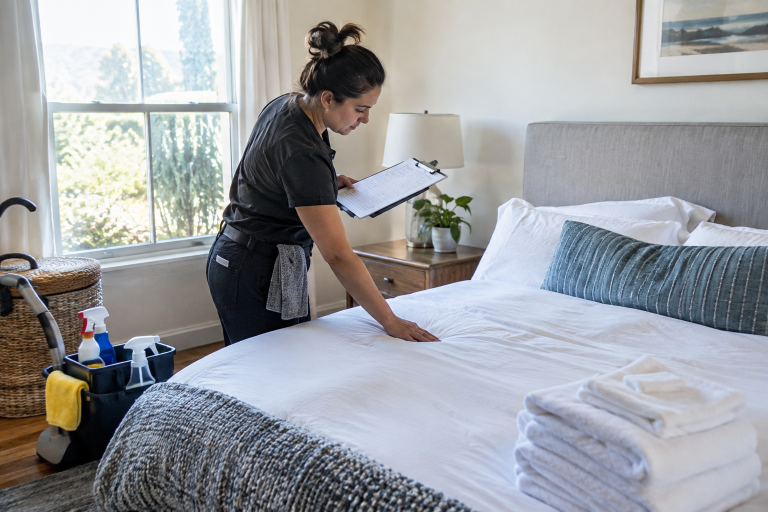
A dependable vacation rental turnover process helps hosts and property managers prepare each space for the next arrival without relying on memory, guesswork, or last-minute messages. Well-designed cleaning checklists give every team member a shared view of what must be cleaned, restocked, inspected, and reported before guests check in.
The goal is not simply to make a property look clean. A complete turnover should restore the rental to its expected condition, identify problems early, and create a consistent experience, whether the owner, a single cleaner, or a larger operations team completes the work.
Why Turnover Systems Matter
Checkout and check-in windows can be short, especially when bookings are close together. One missed task, such as an unwashed coffee pot, a low toilet paper supply, a broken lamp, or a misplaced remote, can create an avoidable guest problem. A written process helps the team focus on the same priorities every time, rather than deciding what matters while rushing through the property.
Professional housekeeping standards should cover both cleanliness and presentation. The Vacation Rental Management Association’s cleaning guidelines can be a useful reference point for setting expectations for cleaning teams, inspections, and guest-ready presentation.
What a Complete Turnover Should Cover
A practical turnover moves through the property in a consistent sequence:
- Enter the property and complete an initial condition check.
- Look for damage, missing items, and belongings left by departing guests.
- Start laundry and separate linens that need attention.
- Clean each room according to its required tasks.
- Restock guest and cleaning supplies to set quantities.
- Return furniture, decor, and guest materials to their standard positions.
- Check safety items and guest-facing equipment.
- Complete a final quality review before marking the property ready.
Step One: Set a Property-Specific Standard
A generic list is a useful starting point, but it cannot capture the details of every rental. A studio apartment, a cabin, a beach house, and a multi-bedroom home with a pool all have different needs. Define bed layouts, appliance instructions, outdoor areas, access points, amenity levels, and any specialty equipment that guests use.
Describe what “guest-ready” means in plain language. For example, beds should be made with the correct linen set, towels should be placed in the expected location, surfaces should be free of visible dust and residue, and the home should not retain trash or strong odors from the previous stay. Separate required tasks from optional upgrades so the team knows what cannot be skipped.
Step Two: Organize Work by Room and Sequence
Entry and Common Areas
Check locks, doors, lights, visible surfaces, seating, rugs, and guest information. Remove left items and trash, then return remotes, signs, and decor to their designated places.
Kitchen
Clean counters, sink, appliances, cabinet fronts, and floors. Remove leftover food from the refrigerator and pantry areas. Count dishes, cookware, glassware, and utensils when those items are part of the guest offering. Restock consumables to specific quantities rather than relying on vague instructions such as “refill as needed.”
Bedrooms and Bathrooms
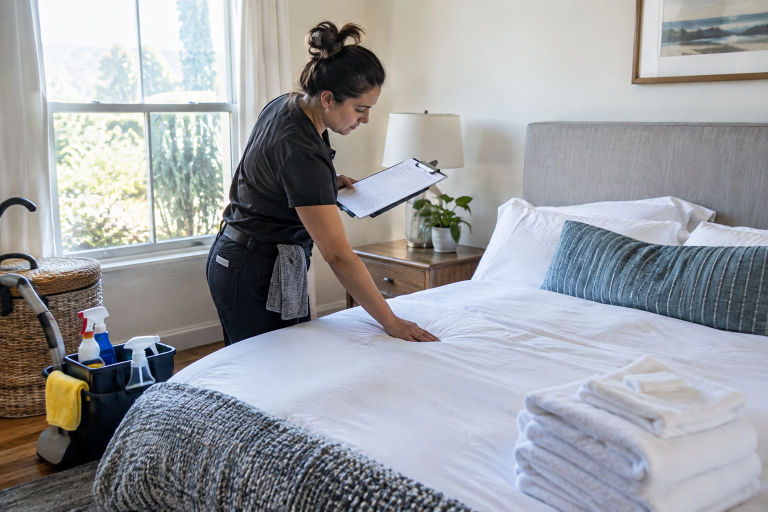
In bedrooms, replace linens, inspect pillows and mattress protectors, and check under beds, in drawers, and near nightstands. In bathrooms, clean fixtures, mirrors, floors, and drains; replace towels, bath mats, toiletries, and paper products; then do a final check for hair, water spots, and residue.
Outdoor Areas and Special Features
Inspect patios, balconies, paths, grills, and outdoor furniture. If the property has a pool, hot tub, fireplace, or other specialty feature, assign only the checks appropriate to the cleaner’s training. Maintenance work should be reported, not improvised, during a turnover.
Step Three: Use Visual Standards Where They Help
Written directions are not always enough for staging details. Reference photos can show how beds should look, where towels belong, how to arrange an entry table, or where to place a lockbox. Use the same angles when practical, update images after room changes, and reserve photos for tasks where appearance or condition matters.
Step Four: Add Condition and Maintenance Checks
A turnover is also an opportunity to notice issues before the next guest does. Ask the team to report broken items, stains, missing inventory, loose handles, water concerns, unusual odors, damaged furniture, and visible trip hazards. Create a simple urgency system: issues affecting safety, access, water, power, or essential amenities should be escalated immediately, while cosmetic or nonessential items can be logged for scheduled repair.
Step Five: Build a Short Quality Review
The final review should focus on high-risk areas rather than becoming another long list that no one reads. Confirm that required tasks are complete, supplies meet the property standard, photos or notes support any reported issue, and open problems have an owner. Useful measures include repeat-cleaning requests, missed-task reports, late-ready properties, supply shortages, and the time required to resolve reported issues.
How to Keep Turnovers Fast Without Cutting Corners
- Start laundry early when it must be completed on-site.
- Clean rooms in the same order on every visit.
- Store supplies in labeled, easy-to-reach locations.
- Assign clear ownership when more than one person is working.
- Use realistic time targets based on property size and features.
- Investigate recurring delays instead of only asking people to work faster.
Common Mistakes to Avoid
Turnover processes become weaker when tasks are too broad, hidden areas are ignored, restocking quantities are undefined, or deep-cleaning work is mixed into every stay. Other common problems include changing standards without notifying the team, collecting photos that no one reviews, and allowing repeated maintenance issues to remain unresolved.
Review and Update the Process
Review the checklist after a guest complaint, a missed task, a renovation, a furniture change, or a recurring delay. A short quarterly review can also reveal instructions that no longer apply. Ask cleaners where directions are unclear or time is wasted, then maintain a dated version so everyone knows which standard is current.
Common Questions
How long should a vacation rental turnover take?
Timing depends on the property’s size, number of beds and bathrooms, laundry setup, outdoor features, guest count, and the condition the home was left in. Use your own completed turnovers to set reasonable expectations for each property.
What is the difference between a turnover and a deep clean?
A turnover prepares the rental for the next guest. A deep clean covers less frequent work, such as detailed appliance cleaning, baseboards, vents, windows, and difficult-to-reach areas.
How can a host tell whether the process is working?
Look for fewer repeat issues, more consistent room presentation, accurate supply levels, quicker issue reporting, and predictable readiness before check-in.
Conclusion
A strong vacation rental turnover process does not need to be complicated. It needs to be clear, property-specific, easy to follow, and regularly reviewed. When cleaning, restocking, inspections, maintenance reporting, and final presentation follow the same standard, hosts can reduce uncertainty and deliver a more consistent guest experience.