
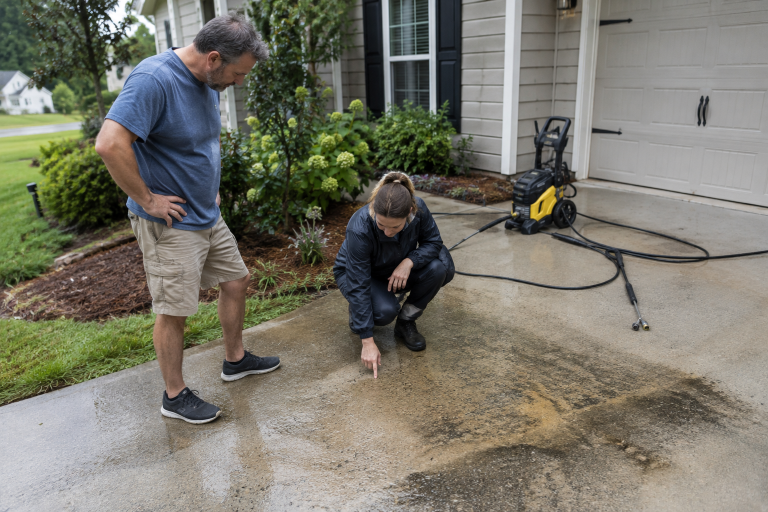
Exterior surfaces in Belmont, North Carolina, face a steady mix of pollen, damp shade, windblown debris, algae, and everyday grime. Knowing whether a surface needs forceful rinsing or a gentler treatment can help homeowners avoid unnecessary damage while planning appropriate cleaning for driveways, patios, siding, and other outdoor areas.
Pressure washing and soft washing are often treated as interchangeable terms, but they work differently. The best approach depends on the material being cleaned, its age and condition, the kind of buildup present, and the nearby landscaping or fixtures that need protection.
Why the Cleaning Method Matters
A dirty exterior does not automatically need the strongest available spray. A powerful stream can remove stubborn grime from some hard surfaces, but the same force can scar wood, dislodge loose paint, disturb aging mortar, or push water behind siding. Conversely, a low-pressure process may be the more suitable option for organic buildup on delicate surfaces.
For Belmont properties, a thoughtful approach to exterior cleaning starts with identifying what is actually on the surface. Dirt, pollen, tire marks, oil, mildew, algae, and loose paint do not all respond to the same method.
What Pressure Washing Does
Pressure washing relies primarily on mechanical force. Water is delivered through a nozzle at a level intended to break up and rinse away surface grime, loose debris, and some stains. It is commonly considered for durable, flat surfaces where controlled water pressure can be directed safely.
Surfaces that may suit controlled pressure
- Concrete driveways and walkways: These areas can collect tire marks, mud, and ground-in dirt.
- Patios and some pavers: The process can remove debris from broad, accessible surfaces, although joints and loose material need care.
- Some masonry: Newer, sound masonry may handle carefully adjusted pressure better than older brick or deteriorating mortar.
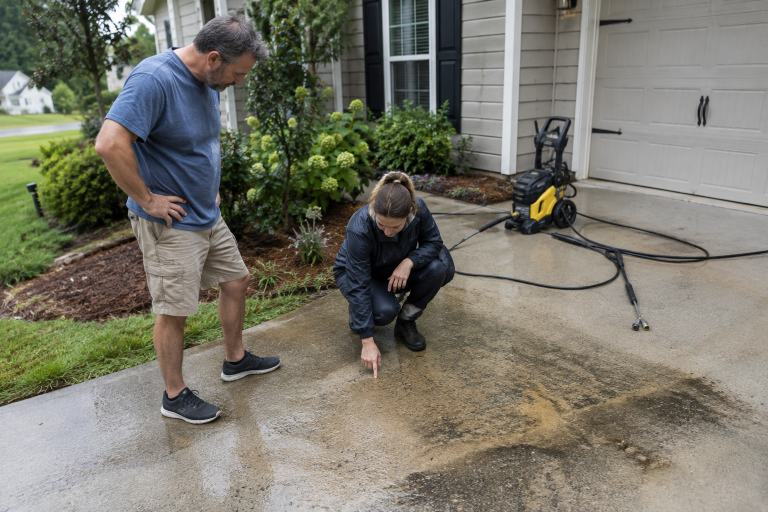
Even durable materials are not indestructible. Nozzle selection, spray angle, distance from the surface, and the length of time spent in one area all affect the outcome. Concentrating a spray in one spot can create visible lines or uneven cleaning patterns.
What Soft Washing Does
Soft washing uses much lower water pressure and depends more heavily on a cleaning solution suited to the surface and buildup. After an appropriate dwell time, the area is gently rinsed. This approach is often considered when direct force could damage a coating, finish, or fragile exterior material.
Surfaces that often need a gentler process
- Vinyl siding: Water should not be driven upward or into gaps behind panels.
- Roof shingles: Roof materials should be cleaned only in a way consistent with their condition and manufacturer guidance.
- Painted wood: High pressure can remove paint or raise wood grain.
- Decks and fences: Softwood and weathered boards can splinter or show roughened fibers when overwashed.
Low pressure does not eliminate the need for care. Cleaning products must be mixed and handled according to their labels, and overspray should be controlled around vegetation, windows, outdoor furniture, and pet areas.
A Practical Surface-by-Surface Guide
- Concrete: Controlled pressure washing may be appropriate for intact slabs. Check for cracks, sealed areas, damaged edges, and drainage paths first.
- Vinyl siding: A low-pressure method is generally the safer starting point. Spray direction matters because upward spraying can send water behind panels.
- Asphalt shingles: Avoid assuming that pressure is suitable. Roof age, visible wear, loose material, and product guidance should influence the decision.
- Wood: Use the least aggressive approach that can achieve the goal. A test patch is particularly useful on unfinished, aged, or previously stained wood.
- Brick and mortar: Inspect joints carefully. Older mortar, cracks, and loose sections may call for a lower-pressure technique or a different cleaning plan.
What Can Go Wrong With the Wrong Method?
Using excessive pressure can peel paint, etch some surfaces, damage wood fibers, weaken compromised mortar, and force water into openings around siding, trim, windows, or doors. It can also leave a clean but uneven appearance when only portions of a surface are treated aggressively.
On the other hand, a soft-wash approach may not fully remove certain oil stains, embedded tire marks, or heavy mineral deposits from concrete without additional surface-specific treatment. The objective is not to use one method everywhere, but to match the method to the material and the problem.
How to Choose a Safer Cleaning Plan
- Identify the surface material and check its overall condition.
- Look for cracks, peeling coatings, loose mortar, damaged seals, or previous repairs.
- Determine whether the buildup is dirt, organic growth, oil, rust, or another stain.
- Select the least aggressive effective method.
- Test a small hidden area before cleaning the full surface.
- Move portable furniture and protect nearby plants, doors, windows, and fixtures.
- Plan where rinse water and residue will travel.
Cleaning Products, Plants, and Runoff
When cleaning solutions are part of the process, label instructions for dilution, protective equipment, dwell time, storage, and rinsing should guide the work. The EPA’s Safer Choice program identifies products with ingredients evaluated for human health and environmental considerations, which can be useful when comparing household cleaning options.
Property owners should also avoid treating runoff as an afterthought. Stormwater can carry pollutants through drainage systems and into nearby water bodies, so controlling overspray and preventing unnecessary chemical discharge are sensible parts of a cleaning plan. The EPA notes that polluted stormwater runoff can be transported through municipal storm sewer systems.
DIY Cleaning vs. Professional Help
Small, ground-level concrete areas may be manageable for a prepared homeowner using suitable equipment and safe technique. Higher-risk projects deserve more caution. Roofs, tall exterior walls, fragile materials, heavily stained surfaces, and areas close to sensitive landscaping can involve fall hazards, water intrusion concerns, or product-handling issues.
Before arranging exterior cleaning, ask which method is proposed for each surface, what products will be used, whether a test area is planned, how plants will be protected, and how runoff will be managed. A clear written scope should distinguish between surfaces rather than treating the entire property as one identical cleaning job.
Seasonal Planning in Belmont
Timing affects results. Rain can interrupt work or delay drying, while humid and shaded conditions can allow organic buildup to return more quickly in certain areas. Cleaning may be easier to schedule before repainting, hosting an outdoor gathering, listing a home, or addressing visible algae and mildew.
No single calendar works for every property. Homes near trees, shaded fences, north-facing walls, and frequently damp areas may need more regular inspection than open, sunny surfaces.
Common Questions
Is pressure washing always stronger than soft washing?
Pressure washing generally uses more mechanical force. Soft washing relies more on cleaning chemistry and low-pressure rinsing. Stronger is not automatically safer or more effective.
Can one property need both methods?
Yes. A property may have a concrete driveway suited to controlled pressure and siding, roofing, or painted wood that needs a gentler process.
Can pressure washing damage concrete?
It can, especially when excessive force, poor nozzle control, or prolonged spraying in one spot creates markings or surface damage.
Final Decision Checklist
- Match the method to the material, not just the visible dirt.
- Use controlled pressure only on surfaces that can tolerate it.
- Choose low-pressure treatment for delicate, coated, or weathered materials.
- Inspect damage before cleaning and test uncertain areas.
- Protect landscaping and manage runoff thoughtfully.
- Seek qualified guidance when surface condition, height, or access creates added risk.
Safe exterior cleaning in Belmont is less about using the most powerful equipment and more about making a careful choice for each surface. Inspection, product selection, controlled technique, and property protection all contribute to a cleaner exterior without avoidable repairs.